The Role of Tech in Disaster Management
Introduction
Disasters, whether natural or man-made, have always posed serious threats to humanity. From earthquakes and hurricanes to industrial accidents and pandemics, these events can devastate communities, economies, and lives within moments. In the past, disaster management was heavily dependent on manual processes, slow communication methods, and limited prediction systems. However, as technology has advanced, it has fundamentally changed the way disasters are managed. Today, technology plays an integral role in every stage of disaster management, including preparedness, response, recovery, and mitigation. With the help of digital tools, artificial intelligence, data analytics, and communication platforms, disaster management has become faster, more efficient, and more precise.
This blog explores in detail the role of technology in disaster management, examining its applications, benefits, challenges, and future potential.
Understanding Disaster Management
Before diving into the role of technology, it is important to understand what disaster management entails. Disaster management is a cycle of activities designed to minimize the impact of disasters and ensure effective recovery. It includes four major phases:
- Preparedness – Actions taken before a disaster to plan, train, and equip organizations and communities.
- Response – Immediate actions taken during and right after a disaster to save lives and reduce further damage.
- Recovery – Efforts made after a disaster to restore normalcy and rebuild affected areas.
- Mitigation – Long-term strategies to reduce the impact of potential future disasters.
Technology intersects with all these phases, providing tools that enhance efficiency, speed, and accuracy.
Technology in Preparedness
Preparedness is the foundation of effective disaster management. Modern technology plays a critical role in preparing communities and organizations for possible disasters.
Early Warning Systems
Early warning systems use satellites, radars, and sensors to detect signs of disasters before they occur. For example, meteorological satellites can track storms and issue alerts days in advance. Earthquake early warning systems, using seismographs and AI algorithms, can provide precious seconds of warning that save lives.
Simulation and Training Tools
Virtual reality and simulation software allow disaster management teams to train under realistic conditions. These simulations prepare first responders for various scenarios, from floods to fires, helping them react appropriately when faced with actual crises.
Data Analytics and Risk Mapping
With the help of geographic information systems (GIS), authorities can map disaster-prone areas and analyze risks. Data-driven models allow governments to prepare evacuation plans and allocate resources efficiently.
Technology in Response
The response phase is the most critical, as immediate action can determine the difference between life and death. Technology has revolutionized this stage by providing rapid communication, real-time information, and advanced tools for rescue efforts.
Communication Technologies
Mobile networks, satellite phones, and social media platforms are crucial during disasters. They allow affected people to call for help, responders to coordinate, and authorities to share information quickly.
Drones and Robotics
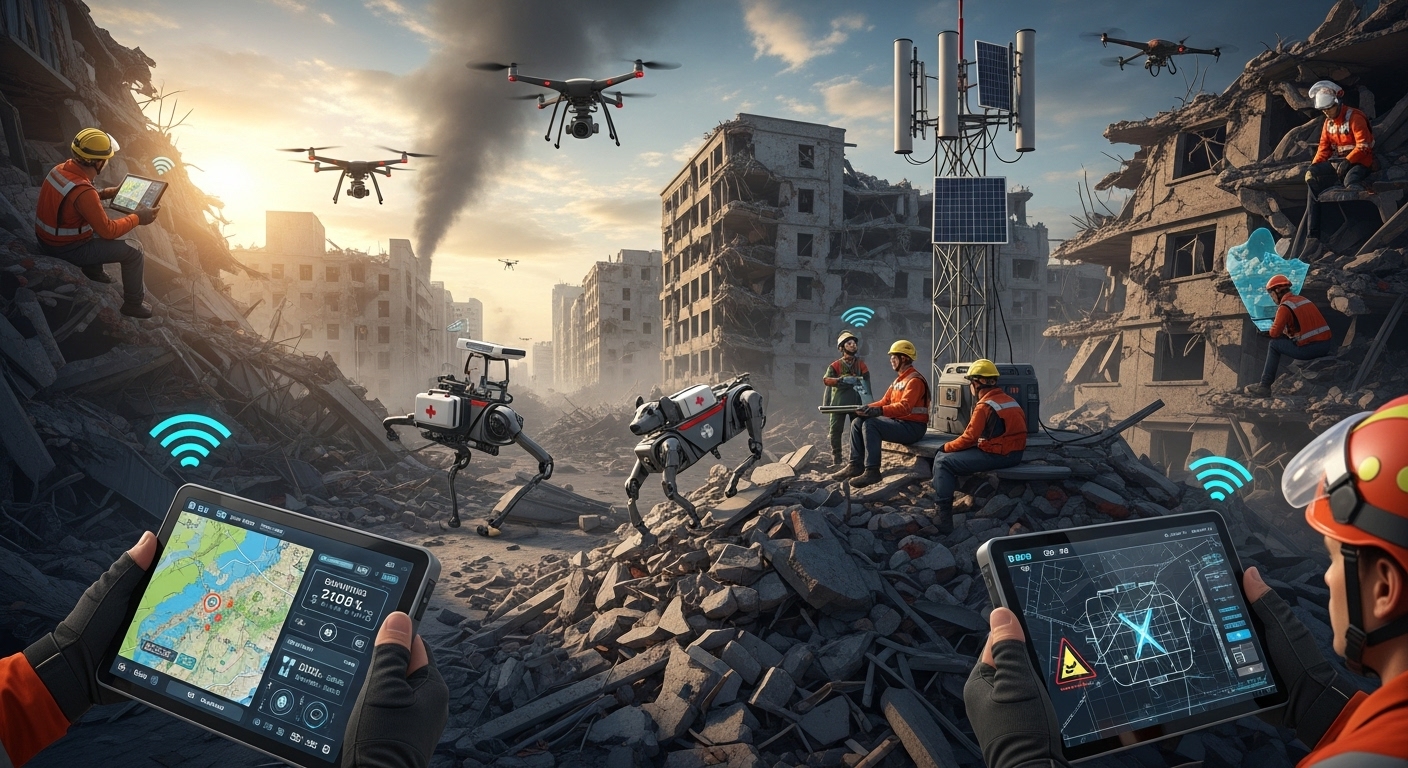
Drones are now widely used to survey disaster-hit areas, locate victims, and deliver essential supplies like food and medicine. Robots are also deployed in hazardous environments where human rescuers cannot safely operate, such as collapsed buildings.
Artificial Intelligence and Machine Learning
AI systems analyze massive amounts of data in real-time to predict the movement of hurricanes, floods, or wildfires. During a crisis, AI can optimize resource distribution and prioritize areas that need urgent attention.
Medical Technology
Portable medical devices and telemedicine platforms are lifesaving during disasters. Health workers can use mobile health apps to diagnose and treat patients remotely when hospitals are overwhelmed or inaccessible.
Technology in Recovery
The recovery phase involves rebuilding communities and restoring normal life. This process, which can take months or years, benefits significantly from modern technology.
Digital Payment Systems
Mobile banking and digital wallets ensure that relief funds reach affected people quickly and securely. This reduces the risk of corruption and helps victims buy what they need most.
Construction and Engineering Technology
Advanced construction materials and 3D printing are being used to build disaster-resistant homes and infrastructure. In some cases, 3D-printed shelters have been deployed to quickly house displaced families.
Mental Health Support through Technology
Technology provides platforms for psychological support, such as teletherapy sessions or chatbots that offer basic counseling to those traumatized by disasters.
Monitoring and Evaluation Tools
Data collection tools and apps help organizations track recovery progress. By using technology, governments and NGOs can measure whether relief programs are effective and make adjustments as needed.
Technology in Mitigation
Mitigation is about preventing disasters from becoming catastrophic or minimizing their impact. Here, technology acts as a proactive shield.
Smart Infrastructure
Smart buildings and infrastructure are equipped with sensors that monitor conditions such as structural integrity, fire risks, or seismic activity. These systems can trigger alarms or corrective actions before damage occurs.
Climate Modeling and Environmental Monitoring
Climate change has increased the frequency of extreme weather events. Technology-driven climate models help predict long-term risks and guide sustainable planning for cities and rural communities.
Internet of Things (IoT) Devices
IoT technology integrates with disaster mitigation systems. For instance, water level sensors can detect rising rivers and issue flood warnings, while fire detection sensors can alert communities about potential wildfires.
Case Studies of Technology in Disaster Management
The 2004 Indian Ocean Tsunami
The tsunami highlighted the lack of early warning systems in some parts of the world. Since then, advances in seismology and tsunami detection technology have been implemented, ensuring that coastal communities now receive timely alerts.
The 2010 Haiti Earthquake
In the aftermath of the Haiti earthquake, technology such as satellite imagery and crisis mapping tools played a vital role in coordinating relief operations. Crowdsourced platforms helped responders locate survivors and allocate resources effectively.
The COVID-19 Pandemic
The pandemic demonstrated the critical role of technology in disaster management. From contact tracing apps to telemedicine and AI-driven vaccine research, technology became central to the global response.
Challenges of Using Technology in Disaster Management
While technology has enhanced disaster management, it is not without challenges.
Accessibility and Digital Divide
Not all communities have access to advanced technology. In developing countries, lack of internet, smartphones, or electricity can hinder effective use of disaster management tools.
Data Privacy and Security
The use of big data and surveillance raises concerns about privacy. During disasters, sensitive information must be protected from misuse or cyberattacks.
Reliability of Technology
Disasters can damage communication networks, power grids, and internet infrastructure, rendering some technologies unusable when they are needed most.
High Costs
Developing and maintaining advanced disaster management systems requires significant financial resources. Poorer nations may struggle to afford such technology.
The Future of Technology in Disaster Management
Looking ahead, technology will become even more integral to disaster management.
Artificial Intelligence and Predictive Analytics
AI will improve the accuracy of disaster forecasting, allowing communities to prepare earlier and more effectively. Predictive analytics will optimize evacuation plans and resource allocation.
Blockchain for Relief Distribution
Blockchain technology promises transparent and efficient distribution of relief funds and supplies, reducing corruption and delays.
Autonomous Rescue Systems
Future disaster response may involve autonomous drones and robots capable of carrying out rescues without human control, reaching dangerous areas faster.
Space-Based Technology
Satellites will continue to play a crucial role, with advancements enabling more detailed mapping, faster detection, and global coverage of disaster-prone areas.
Conclusion
Technology has revolutionized disaster management in ways that were unimaginable just decades ago. From early warning systems to AI-driven predictions, from drones conducting rescue missions to digital payments supporting recovery, technology impacts every stage of the disaster management cycle. While challenges such as cost, accessibility, and reliability remain, the benefits far outweigh the limitations.
As technology continues to evolve, its role in disaster management will expand, making societies more resilient and capable of facing the challenges of an uncertain future. By embracing innovation while ensuring inclusivity, transparency, and sustainability, technology can help save millions of lives and safeguard communities worldwide.