Exploring the Cutting Edge: How Emerging Technologies Are Shaping Our World
In today’s rapidly evolving digital landscape, technology is no longer just a tool—it’s a transformative force reshaping every aspect of our lives. Whether it’s artificial intelligence (AI) optimizing workflows or quantum computing unlocking new frontiers, the impact of emerging technologies is profound and far-reaching. As we move toward a future filled with advancements that were once considered science fiction, it’s essential to understand how these innovations are not just changing the way we work and communicate, but also how they are redefining what’s possible. In this post, we’ll take a closer look at some of the most exciting tech trends on the horizon and their potential to revolutionize the world as we know it.
Artificial Intelligence: Revolutionizing Industries
Artificial Intelligence (AI) is at the forefront of technological evolution, and its influence is expanding across industries at an unprecedented rate. From natural language processing to machine learning algorithms, AI is enhancing human decision-making, automating repetitive tasks, and solving complex problems with remarkable accuracy.
One of the most notable impacts of AI is in the realm of healthcare. AI-powered diagnostic tools can process vast amounts of medical data, allowing for faster and more accurate diagnoses. These systems can detect early signs of diseases such as cancer, identify patterns in patient data, and even suggest personalized treatment options. In industries like finance, AI is automating tasks such as fraud detection and market prediction, providing businesses with better insights into customer behavior and financial trends.
AI is also driving innovation in autonomous vehicles, with self-driving cars set to transform transportation by reducing traffic accidents and improving efficiency. As AI systems continue to evolve, the technology will only become more capable, opening the door to new applications and enhancing the quality of life for millions of people worldwide.
Quantum Computing: Unlocking Unimaginable Power
Quantum computing represents a breakthrough in computational power that could soon surpass the capabilities of today’s classical computers. Unlike traditional computers that use bits to process data in binary form (0s and 1s), quantum computers leverage qubits, which can represent multiple states simultaneously. This unique property allows quantum computers to solve problems that would take classical computers thousands of years to complete, in mere seconds.
Quantum computing has the potential to revolutionize industries such as cryptography, drug discovery, and logistics. In the field of cryptography, quantum computers could render current encryption methods obsolete, prompting the need for more advanced security protocols. In medicine, quantum simulations could accelerate drug development by allowing scientists to model complex molecules and predict how they will behave in the human body.
Despite its promising future, quantum computing is still in its infancy, and significant challenges remain in making the technology scalable and practical for widespread use. However, research in this field is progressing rapidly, and we may soon see the first practical applications of quantum computing emerge, fundamentally changing how we approach problem-solving in science, business, and beyond.
The Rise of the Metaverse: A New Virtual Reality
The concept of the metaverse—an immersive, interconnected digital universe—has captured the imagination of tech enthusiasts and businesses alike. While the idea of a virtual world where people can socialize, work, and play is not entirely new, recent advancements in virtual reality (VR), augmented reality (AR), and blockchain technology are making the metaverse a much more tangible reality.
The metaverse promises to be more than just a collection of virtual spaces; it is envisioned as a fully immersive world where users can interact in 3D environments using avatars, participate in virtual events, shop, work, and create. Companies like Meta (formerly Facebook) and Microsoft are investing heavily in the development of this virtual universe, signaling the beginning of a new digital era.
In addition to providing new opportunities for entertainment, the metaverse could redefine how we work. Virtual office spaces, where teams can collaborate in real-time from anywhere in the world, are already in development. As VR and AR technologies improve, the metaverse will likely become a mainstream destination for businesses and consumers alike, with significant impacts on industries such as gaming, retail, education, and even healthcare.
Blockchain Technology: Beyond Cryptocurrency
Blockchain technology has emerged as a game-changer for industries seeking to improve security, transparency, and decentralization. While blockchain is widely known for its role in supporting cryptocurrencies like Bitcoin, its potential applications extend far beyond digital currencies. At its core, blockchain is a distributed ledger system that records transactions in a secure, transparent, and immutable way.
In the financial sector, blockchain is being used to create more efficient, secure payment systems and streamline supply chains. Smart contracts, which are self-executing contracts with terms written directly into code, are also transforming industries such as real estate, legal services, and insurance. By reducing the need for intermediaries and ensuring trustless transactions, blockchain is lowering costs, enhancing transparency, and speeding up processes.
The technology also holds great promise in sectors like healthcare, where blockchain could be used to securely store and share medical records, providing patients with greater control over their personal data. Furthermore, blockchain’s role in NFTs (non-fungible tokens) is helping artists and creators monetize their work in new and innovative ways.
5G Networks: Connecting a New Era of Innovation
The rollout of 5G networks is set to revolutionize connectivity, providing faster speeds, lower latency, and greater capacity than current 4G networks. With 5G, the potential for innovation is vast. The technology promises to enable a new era of connectivity, from faster mobile internet speeds to enabling real-time data sharing between IoT (Internet of Things) devices.
In the realm of autonomous vehicles, 5G will play a crucial role in ensuring vehicles can communicate with each other and their surroundings in real-time, improving safety and efficiency. For industries like healthcare, 5G will facilitate remote surgery and telemedicine, making healthcare more accessible and efficient.
The increased speed and reduced latency of 5G will also fuel the growth of AR and VR applications, offering smoother and more immersive experiences for consumers. As the technology becomes more widespread, we can expect to see its transformative impact on everything from smart cities and agriculture to entertainment and education.
Sustainability Tech: Green Innovations for a Better Future
As climate change continues to pose significant challenges, sustainability has become one of the most pressing concerns of our time. Thankfully, technology is providing innovative solutions that can help mitigate environmental damage and create a more sustainable future. Clean energy technologies, such as solar, wind, and hydrogen fuel cells, are becoming more efficient and cost-effective, enabling a transition away from fossil fuels.
Additionally, innovations in sustainable agriculture, such as vertical farming and precision irrigation, are helping to reduce resource consumption while feeding a growing global population. Electric vehicles (EVs) and advances in battery technology are reducing the carbon footprint of transportation, while AI and data analytics are optimizing energy usage in buildings, reducing waste, and enhancing overall efficiency.
Technology is also enabling individuals and businesses to adopt more sustainable practices, from using smart thermostats to monitoring carbon footprints. As the world continues to grapple with environmental challenges, these technological innovations are providing hope for a greener, more sustainable future.
The Internet of Things: Connecting Everything
The Internet of Things (IoT) refers to the growing network of interconnected devices that communicate with each other via the internet. From smart thermostats and wearables to autonomous vehicles and connected home appliances, IoT is enhancing our ability to monitor, control, and optimize our environments in real-time.
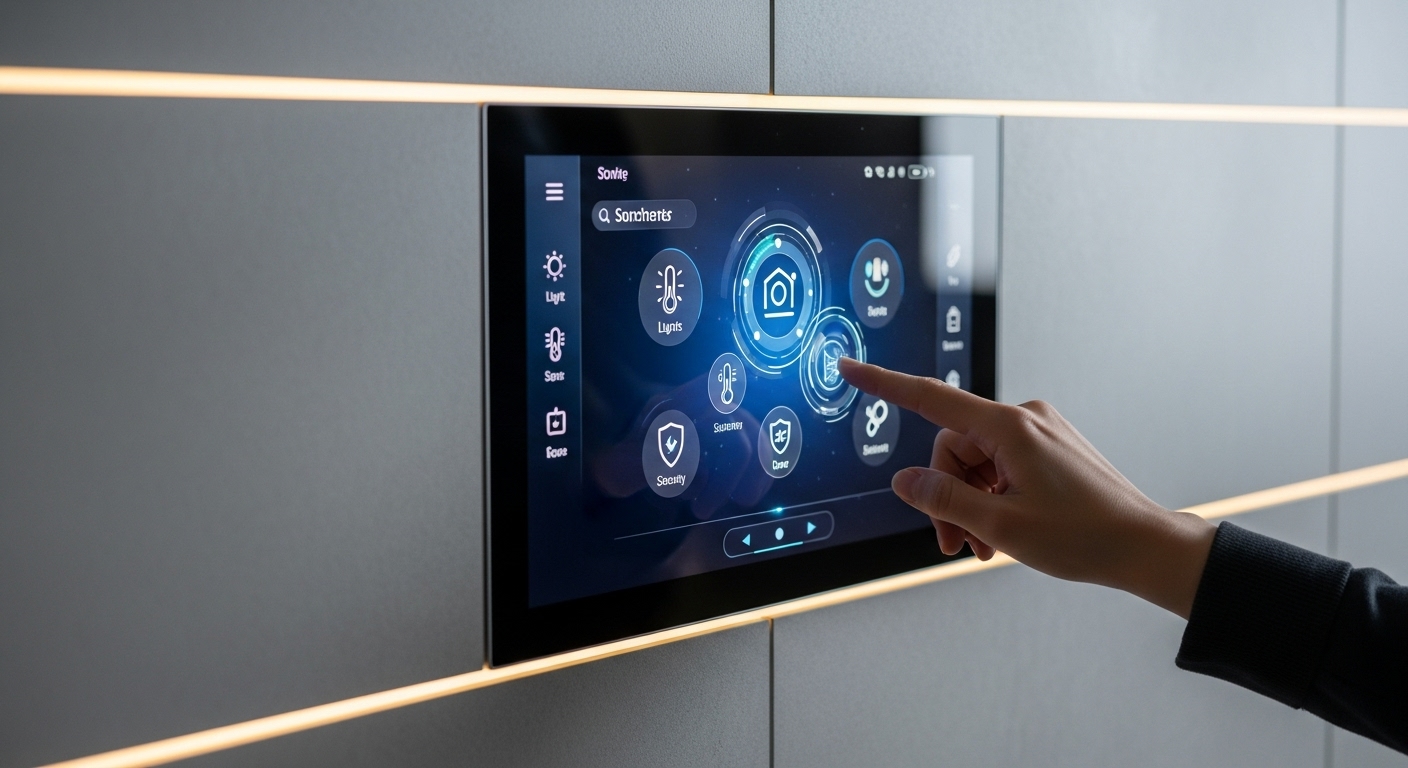
In smart homes, IoT devices enable homeowners to control everything from lighting and temperature to security systems and entertainment, all from a single app or voice command. In industries like manufacturing and logistics, IoT sensors are improving operational efficiency by providing real-time data on equipment performance and inventory levels.
As the IoT ecosystem continues to expand, it will become an even more integral part of our daily lives. The data generated by these devices will be harnessed to improve everything from healthcare outcomes to city planning, ushering in a future where the physical world is seamlessly connected to the digital one.
Conclusion: Embracing the Future of Technology
The world is on the brink of a technological revolution, and the innovations we’ve explored in this blog are only the beginning. From artificial intelligence and quantum computing to blockchain and sustainability tech, these emerging technologies are set to transform industries and improve the quality of life for billions of people worldwide.
However, with these advancements come challenges, including ethical considerations, cybersecurity risks, and the need for responsible regulation. As we continue to push the boundaries of innovation, it’s crucial that we work together to ensure that technology is harnessed for the greater good.
The future is undeniably exciting, and the possibilities for what’s to come are endless. By embracing the changes on the horizon and adapting to new technologies, we can build a world that is smarter, more sustainable, and connected in ways we’ve never imagined. The next chapter of human progress is being written today, and it’s up to us to shape it.