Beyond Innovation: How Emerging Technology is Shaping Tomorrow
Introduction
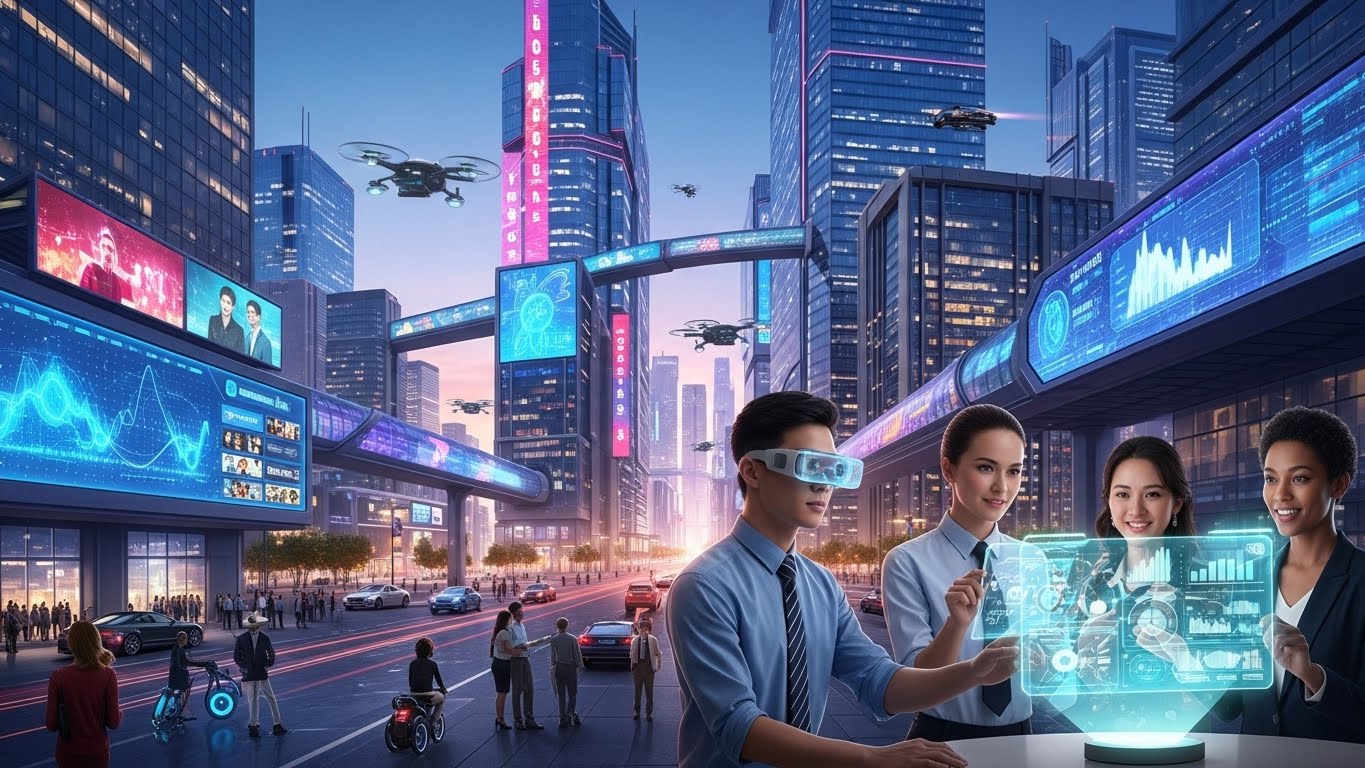
Technology is no longer just a tool; it has become the backbone of modern life. From the way we communicate to how we work, travel, and even manage our health, technology impacts every aspect of our daily existence. The pace of innovation today is extraordinary, and many emerging technologies promise to transform the world in ways we are only beginning to understand. This blog explores the most significant trends and innovations shaping the future, from artificial intelligence and quantum computing to bio-integrated devices and sustainable tech solutions.
Artificial Intelligence: From Assistance to Autonomy
Artificial intelligence has moved far beyond simple voice assistants and recommendation engines. Today, AI is becoming autonomous, making decisions, analyzing data at scale, and interacting seamlessly with humans. One of the most exciting aspects of AI is its ability to learn and adapt. Machine learning models can analyze complex patterns, optimize workflows, and even predict outcomes in areas like healthcare, finance, and logistics.
For instance, AI can now identify early signs of diseases by analyzing medical imaging and patient data. In finance, it detects fraud patterns faster than any human analyst. Supply chains are optimized by AI systems that predict demand fluctuations and recommend adjustments. As AI becomes more embedded in our environments, the way we interact with technology is shifting from reactive to proactive assistance. Ambient AI, which operates seamlessly in the background, is a key part of this evolution, offering solutions before users even recognize a problem.
Quantum Computing: Unlocking New Horizons
Quantum computing represents a radical shift in computational power. Unlike classical computers, which process information as ones and zeros, quantum computers use qubits that can exist in multiple states simultaneously. This property allows them to solve problems that are practically impossible for traditional machines.
Industries like pharmaceuticals, climate modeling, and cryptography stand to benefit immensely. Quantum computers could simulate complex chemical reactions in seconds, helping researchers develop new drugs or sustainable materials more efficiently. Financial institutions could model risk in ways currently unimaginable, while cybersecurity experts work on quantum-resistant encryption to safeguard data. Although quantum computing is still in its early stages, its potential to revolutionize problem-solving is unparalleled.
Edge Computing: Bringing Intelligence Closer
The explosion of connected devices has given rise to edge computing, which processes data closer to where it is generated rather than sending it to centralized servers. This approach reduces latency, increases speed, and enhances security, particularly in applications requiring instant decision-making.
Autonomous vehicles rely on edge computing to interpret sensor data in real time and make split-second decisions. Smart factories use it to monitor machinery and optimize operations. Healthcare wearables analyze vital signs instantly, alerting users and professionals when abnormalities arise. Edge computing ensures that as devices become smarter, they also become faster and more efficient, enabling a future where connectivity and intelligence are seamless and responsive.
Bio-Integrated Technology: Bridging Biology and Machines
Technology is increasingly merging with biology, giving rise to bio-integrated devices and implants that enhance human capabilities and improve health outcomes. Wearable sensors can monitor heart rates, glucose levels, and even brain activity, providing real-time insights that were previously impossible. Neural implants are helping individuals recover from injuries, while prosthetics are becoming more responsive and adaptive.
Synthetic biology is another frontier, where living organisms are engineered to perform specific tasks, such as producing renewable energy, cleaning environmental toxins, or manufacturing sustainable materials. As bio-integrated technology evolves, the boundary between humans and machines blurs, offering a future where health, performance, and well-being are continuously optimized. Ethical considerations will play a crucial role in ensuring that these innovations are safe, equitable, and responsibly applied.
Autonomous Systems: Redefining Industries
Autonomous systems are transforming industries beyond transportation. Self-driving vehicles attract headlines, but automation is also revolutionizing manufacturing, logistics, agriculture, and mining. Drones deliver packages, inspect infrastructure, and map remote areas with unprecedented accuracy. Smart factories utilize robotic machinery to enhance production efficiency while reducing risks to human workers. Agricultural robots plant, monitor, and harvest crops with precision, optimizing yields and resource usage.
The integration of autonomous systems creates both opportunities and challenges. While efficiency and safety improve, the workforce must adapt. The focus will shift toward designing systems that complement human skills rather than replace them entirely. Human oversight, creativity, and decision-making remain critical in this increasingly automated landscape.
Extended Reality: Transforming Experience and Learning
Extended reality, which encompasses virtual, augmented, and mixed reality, is transforming how we interact with digital content. No longer confined to entertainment, extended reality has practical applications in education, healthcare, design, and remote collaboration.
Virtual classrooms allow students to explore interactive simulations of historical events, scientific experiments, and complex phenomena. Surgeons can practice intricate procedures in realistic virtual environments before operating on real patients. Remote teams collaborate in digital spaces that replicate physical offices, enhancing engagement and productivity. Extended reality is evolving rapidly, with devices becoming more immersive, lightweight, and affordable, promising a future where learning and interaction are more experiential than ever before.
Cybersecurity: Protecting a Connected World
As technology becomes more advanced, cybersecurity challenges grow exponentially. Modern threats are sophisticated, targeting everything from personal devices to global networks. Artificial intelligence plays a dual role in this ecosystem, both defending against cyberattacks and being used by malicious actors to bypass security measures.
Future cybersecurity strategies will focus on proactive detection, continuous monitoring, and rapid response. With the advent of quantum computing, traditional encryption methods may become obsolete, prompting the development of quantum-resistant algorithms. Protecting data, privacy, and infrastructure is crucial as digital systems become more interconnected and essential to daily life.
Sustainable Technology: Progress Without Compromise
Sustainability is increasingly central to technological development. Innovations in renewable energy, energy-efficient computing, and eco-friendly materials are redefining how we build and use technology. Solar and wind energy continue to expand, while battery and energy storage technologies improve, enabling broader adoption. Smart grids optimize energy distribution, and circular design principles minimize waste by encouraging repair, reuse, and recycling.
Sustainable tech ensures that innovation does not come at the expense of the environment. It also reflects a broader societal shift toward responsibility, where progress aligns with ecological preservation. By embedding sustainability into the design and implementation of new technologies, we can create a future that is both advanced and responsible.
The Human Factor: Ethics, Accessibility, and Equity
Technological advancement is meaningless without considering the human dimension. As AI, automation, bioengineering, and immersive systems reshape the world, ethical frameworks, inclusivity, and accessibility must guide innovation. Ensuring equitable access to technology prevents the deepening of social divides, while ethical design ensures that AI and automation act in ways that align with societal values.
Technology should empower individuals, enhance quality of life, and foster opportunities. The most successful innovations are those that integrate seamlessly into human contexts, improving lives without creating new burdens. This human-centered approach will define the next era of technology, balancing rapid progress with thoughtful stewardship.
Conclusion
The future of technology is not just about faster devices or smarter software. It is about reshaping society, redefining human potential, and creating systems that support sustainable, inclusive growth. Artificial intelligence, quantum computing, bio-integrated devices, autonomous systems, extended reality, cybersecurity, and sustainable technology are not isolated trends—they are interconnected forces driving a profound transformation.
As we navigate this rapidly evolving landscape, the challenge is to ensure that innovation serves humanity, enhances our experiences, and preserves the planet. By embracing emerging technologies responsibly, we can build a future that is intelligent, connected, and resilient, offering opportunities and possibilities previously limited to imagination.