Beyond the Screen: How Technology is Shaping the Future of Human Experience
Introduction
Technology has become the most powerful force of transformation in modern civilization. It has redefined how people live, communicate, learn, and even think. From smartphones and artificial intelligence to virtual reality and quantum computing, technology is no longer just a tool—it is a living part of the human experience. It shapes economies, fuels creativity, and connects billions across the globe. Yet, beneath this progress lies a deeper question: how will technology continue to influence the human journey in the years to come? This blog explores how the tech-driven world is evolving and the many ways it is reshaping humanity’s future.
The Digital Revolution: From Innovation to Integration
The journey of technology has moved from mechanical invention to digital integration. The 20th century brought electricity and early computers, but the 21st century has seen complete digital immersion. Technology is no longer separate from daily life—it exists in everything we do. Whether it is using voice commands to turn on the lights, streaming entertainment, or relying on GPS for travel, digital systems are interwoven into our routines. What makes this revolution different from previous industrial shifts is its speed. Innovation happens in real time, and the moment one technology becomes common, a more advanced version replaces it. This continuous evolution ensures that society is always adapting to something new.
Artificial Intelligence: The Brain of Modern Technology
Artificial Intelligence (AI) is perhaps the most groundbreaking advancement of the century. It is the invisible mind behind many of the systems people use daily. AI allows machines to analyze information, learn from it, and make decisions that mimic human reasoning. From recommendation engines on entertainment platforms to self-driving cars and voice assistants, AI is transforming industries. In medicine, it helps doctors detect diseases early; in finance, it predicts market changes; in education, it personalizes learning experiences for students. However, with such intelligence comes ethical responsibility. AI systems must be designed and used responsibly to prevent bias, misuse, and loss of human oversight. The goal should always be to make technology work for humanity, not against it.
The Internet of Things: A Connected Living Network
The Internet of Things, or IoT, has created an ecosystem of connected devices that communicate with one another without human intervention. Everyday items—from watches and refrigerators to vehicles and traffic systems—are now embedded with sensors and software that collect and share data. This network of connectivity brings efficiency and convenience to modern life. Smart homes can adjust lighting, temperature, and security automatically. Smart cities use IoT to manage energy, waste, and transportation systems. Yet, as connectivity expands, privacy and data security become major concerns. Protecting personal information in an interconnected world is one of the biggest challenges of the digital age.
5G Technology: Powering the Next Wave of Connectivity
The fifth generation of mobile networks, known as 5G, is transforming communication by offering ultra-fast speed and low latency. It allows for real-time data sharing between millions of devices. This innovation will drive the future of technologies such as autonomous vehicles, remote healthcare, and immersive virtual experiences. With 5G, smart factories can operate with precision, remote surgeries can be performed without delay, and global communication can happen instantly. It will not only change how people use the internet but also how industries function. The shift from 4G to 5G represents more than faster downloads—it marks the beginning of an era where connectivity will enable technologies that were once thought impossible.
Cloud Computing: The Foundation of the Digital World
Cloud computing has become the backbone of modern technological infrastructure. It allows data, applications, and services to be stored and accessed remotely through the internet rather than on physical devices. This transformation has revolutionized how businesses and individuals manage information. Companies no longer need massive data centers; instead, they rely on scalable cloud platforms. It supports remote work, digital collaboration, and global accessibility. For individuals, the cloud makes it possible to access files, photos, and documents from anywhere at any time. It also powers major technologies like artificial intelligence and data analytics by providing the storage and computing power needed to process massive amounts of information efficiently.
Cybersecurity: Defending the Digital Frontier
As technology expands, so do digital threats. Cybersecurity has become an essential part of modern life. With financial transactions, personal communication, and critical infrastructure relying on digital systems, protecting data from hackers and cyberattacks is vital. Cyber threats have evolved from simple viruses to sophisticated attacks that can target governments, corporations, and individuals. Modern cybersecurity uses advanced encryption, biometric verification, and AI-driven monitoring systems to detect and prevent breaches. However, human awareness remains the strongest defense. Users must be educated about online safety, password protection, and data sharing to build a secure digital environment. In the future, cybersecurity will not just be a technical necessity—it will be a basic human right.
Automation and Robotics: Transforming Work and Industry
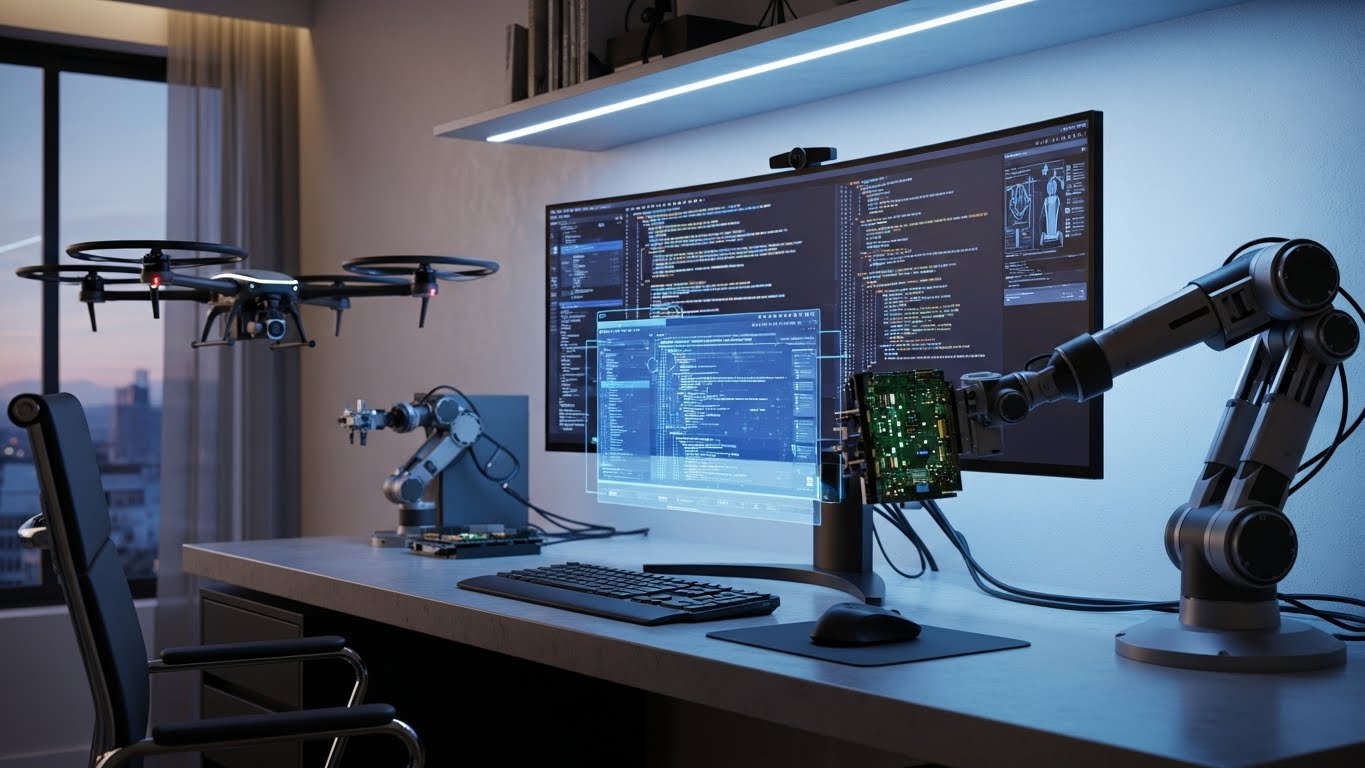
Automation and robotics have redefined how industries operate. Machines can now perform tasks that once required human effort, leading to faster production and higher precision. In manufacturing, robots assemble products with accuracy and consistency. In logistics, automated systems track shipments and manage warehouses. Even in agriculture, drones and robotic systems are revolutionizing how crops are planted and harvested. While automation improves efficiency, it also raises concerns about job displacement. However, technology does not eliminate opportunities—it transforms them. New roles in design, programming, and maintenance are emerging, demanding creativity and technical skills. The future of work will depend on humans and machines working side by side, blending precision with imagination.
Biotechnology: The Fusion of Life and Innovation
Biotechnology represents one of the most profound intersections of science and technology. It applies technological principles to biological systems, leading to groundbreaking discoveries in health, agriculture, and environmental protection. In medicine, biotechnology enables gene editing, personalized treatments, and regenerative therapies that were once unthinkable. In food production, it helps develop sustainable farming methods and genetically modified crops that resist disease and drought. Biotechnology also plays a crucial role in developing renewable biofuels and reducing pollution. This fusion of life and technology is not just improving the quality of human life—it is redefining what it means to be human.
Quantum Computing: Unlocking Infinite Possibilities
Quantum computing stands as one of the most exciting frontiers in modern science. Traditional computers process data in binary code, using ones and zeros. Quantum computers, however, use quantum bits, or qubits, which can exist in multiple states at once. This allows them to perform complex calculations at speeds that were once unimaginable. Quantum computing could solve problems in medicine, climate science, and cryptography that traditional systems cannot handle. Although still in its early stages, its potential is limitless. In the coming decades, quantum technology could unlock new scientific discoveries and completely reshape global industries.
Sustainable Technology: Building a Greener Future
As environmental issues become more pressing, technology is turning toward sustainability. Innovations in renewable energy, green manufacturing, and waste reduction are leading the way toward a cleaner planet. Solar and wind power are now more efficient and affordable than ever before. Electric vehicles are reducing the dependence on fossil fuels. Smart cities use sensors and data analytics to minimize energy waste and pollution. Even tech companies are focusing on creating recyclable hardware and reducing electronic waste. Sustainable technology is not just a trend—it is the foundation of a responsible future. Balancing technological progress with environmental protection is the key to long-term survival and prosperity.
Ethical Technology: The Human Side of Innovation
With every technological advancement comes ethical responsibility. The rise of artificial intelligence, facial recognition, and data collection raises questions about privacy, fairness, and accountability. Can machines make moral decisions? Should technology have limits? These questions define the modern era of ethics in innovation. Governments, organizations, and individuals must collaborate to create guidelines that ensure technology benefits everyone equally. Transparency, regulation, and awareness are essential to prevent misuse. The future of technology depends not only on how powerful it becomes but on how wisely it is used.
Virtual Reality and the Metaverse: The Next Human Dimension
Virtual Reality (VR) and Augmented Reality (AR) are transforming the way people experience the digital world. VR immerses users in computer-generated environments, while AR overlays digital elements on the real world. Together, they are shaping the foundation of the metaverse—a virtual universe where people can work, play, and socialize. From immersive education to digital art and virtual tourism, these technologies create experiences that were once limited to imagination. The metaverse has the potential to redefine human interaction by blending physical and digital existence into one seamless reality.
Education and Technology: The Future of Learning
Technology has revolutionized education by breaking barriers of location, time, and access. Students no longer depend solely on traditional classrooms. Online platforms and digital tools allow learning from anywhere in the world. Artificial intelligence customizes lessons based on a learner’s pace, while virtual reality creates immersive simulations for practical understanding. The digital classroom fosters collaboration and creativity, preparing students for a world driven by technology. However, it also demands digital literacy to ensure learners can safely and effectively use online resources. The education of the future will not be about memorizing facts but mastering the ability to learn, adapt, and innovate continuously.
Conclusion
Technology is no longer a separate part of human life—it is the pulse that drives modern civilization. It has changed how people communicate, work, and understand the world around them. As artificial intelligence becomes more advanced, as quantum computing grows more powerful, and as sustainable innovations reshape industries, humanity stands at the dawn of a new era. Yet, the true measure of progress lies not in machines but in the wisdom of their use. The goal should not be to create a world controlled by technology, but one empowered by it. The future belongs to those who use innovation to uplift humanity, protect the planet, and build a better tomorrow.