The Evolution of Technology: Shaping Our World
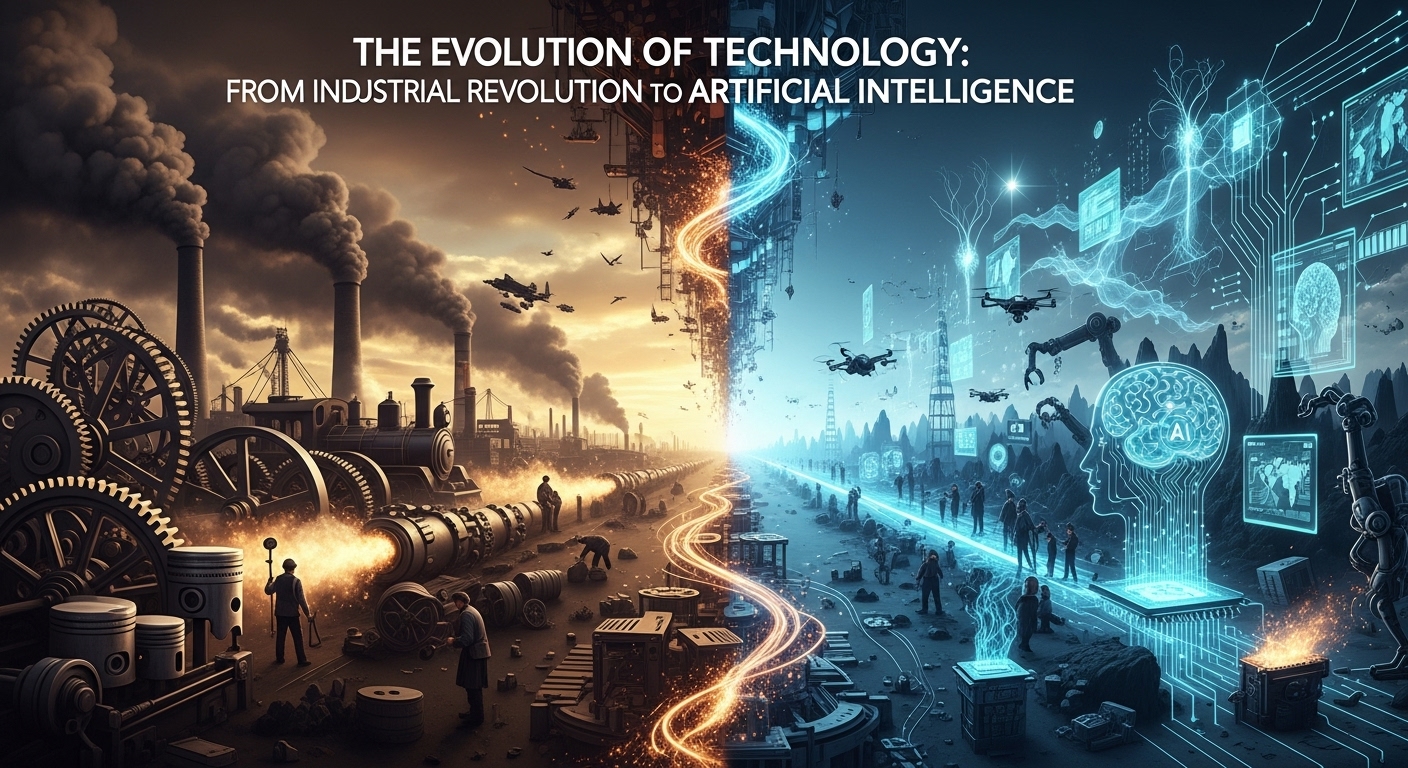
Technology has always been a driving force behind human civilization. From the invention of the wheel to the rise of artificial intelligence, technology has not only transformed the way we live but also redefined what is possible. In the modern era, technological advancements occur at an unprecedented pace, impacting industries, economies, and everyday life. This blog explores the evolution of technology, its current trends, and what the future may hold.
The Early Stages of Technological Development
The history of technology dates back thousands of years. Early humans developed tools from stone, bone, and wood to hunt, gather, and survive. These primitive tools were simple, yet they represented the first steps in human ingenuity. Over time, humans discovered fire, which not only provided warmth and protection but also enabled cooking, leading to improved nutrition and longevity.
Agriculture was another revolutionary technological advancement. The shift from nomadic lifestyles to settled farming communities allowed humans to produce surplus food, leading to population growth and the rise of civilizations. Simple tools like plows and irrigation systems paved the way for more complex technologies, laying the foundation for future innovations.
The Industrial Revolution: Mechanization and Modern Industry
The Industrial Revolution marked a turning point in technological history. Beginning in the late 18th century, it introduced mechanization, factories, and mass production. Innovations such as the steam engine, spinning jenny, and power loom revolutionized manufacturing and transportation.
Mechanization transformed economies, moving them away from agrarian structures toward industrial powerhouses. Railroads and steamships made it possible to transport goods and people across vast distances efficiently. Urbanization increased, as people migrated to cities for employment in factories. This period also saw the emergence of new social structures and labor dynamics, as societies adapted to technological shifts.
The Digital Revolution: Computers and Connectivity
The 20th century brought the digital revolution, which arguably changed the world more profoundly than any prior era. Computers, initially massive and costly machines, evolved into personal devices that could fit on desks and eventually in pockets. The development of microprocessors and semiconductor technology accelerated computing capabilities exponentially.
Alongside computing, the internet emerged as a global network connecting people, information, and services. Communication transformed with the advent of email, social media, and instant messaging. Knowledge became more accessible, allowing collaboration and innovation on a scale never seen before. Businesses adopted digital tools to optimize operations, enhance customer engagement, and create entirely new industries.
Artificial Intelligence: Machines That Think
Artificial Intelligence (AI) represents one of the most transformative technological developments of the 21st century. AI involves machines capable of learning, reasoning, and making decisions. Machine learning, a subset of AI, allows systems to improve performance over time by analyzing data and identifying patterns.
AI is now integrated into numerous applications, from virtual assistants to autonomous vehicles. In healthcare, AI helps diagnose diseases, develop treatment plans, and predict patient outcomes. In finance, algorithms analyze market trends to guide investment strategies. While AI presents remarkable opportunities, it also raises ethical concerns about privacy, employment, and decision-making transparency.
The Rise of the Internet of Things
The Internet of Things (IoT) is another technology reshaping everyday life. IoT refers to a network of interconnected devices that communicate and exchange data over the internet. These devices include smart home appliances, wearable fitness trackers, industrial sensors, and even vehicles.
IoT enhances convenience and efficiency by automating tasks and providing real-time insights. Smart thermostats, for example, adjust heating based on occupancy patterns, saving energy and reducing costs. In industrial settings, IoT sensors monitor machinery to predict maintenance needs, minimizing downtime and improving productivity. The proliferation of IoT devices also presents challenges, particularly in data security and interoperability.
Cloud Computing: Powering the Modern Digital Economy
Cloud computing has transformed the way businesses and individuals store, process, and access data. Instead of relying on physical servers, cloud computing leverages remote servers to provide scalable resources on demand. This technology enables organizations to handle large volumes of data efficiently and cost-effectively.
Cloud platforms support various services, including software as a service (SaaS), infrastructure as a service (IaaS), and platform as a service (PaaS). These models allow businesses to focus on innovation rather than managing IT infrastructure. Cloud computing also facilitates global collaboration, enabling teams across continents to work together seamlessly.
The Transformation of Communication Technology
Communication technology has evolved dramatically over the past century. The invention of the telephone revolutionized voice communication, while radio and television expanded mass communication. The digital era introduced email, instant messaging, and social media platforms, enabling instant interaction worldwide.
Mobile technology further transformed communication by providing access to information and services anytime, anywhere. Smartphones integrate multiple functions, from cameras and GPS to payment systems and health tracking. Emerging technologies like 5G promise even faster and more reliable connectivity, supporting applications such as augmented reality, autonomous vehicles, and smart cities.
Virtual Reality and Augmented Reality: Immersive Experiences
Virtual reality (VR) and augmented reality (AR) are technologies that offer immersive experiences by blending the digital and physical worlds. VR creates entirely simulated environments, while AR overlays digital information onto the real world.
These technologies have applications in entertainment, education, healthcare, and business. VR gaming provides users with fully immersive experiences, while AR enables interactive learning and training. In healthcare, surgeons use AR to visualize patient anatomy during procedures. As hardware becomes more affordable and software more sophisticated, VR and AR are poised to become integral parts of daily life.
Cybersecurity: Protecting Digital Frontiers
As technology advances, cybersecurity becomes increasingly critical. Cyberattacks can target individuals, organizations, and even national infrastructure. Threats include malware, phishing, ransomware, and data breaches, which can result in financial loss, privacy violations, and operational disruption.
Organizations invest heavily in cybersecurity measures, including firewalls, encryption, and intrusion detection systems. Emerging technologies like AI and blockchain also contribute to enhanced security. Cybersecurity is not only a technical challenge but also a societal one, requiring awareness, education, and collaboration to protect the digital ecosystem.
Sustainable Technology: Balancing Innovation and Responsibility
The rapid growth of technology has environmental implications. Data centers consume significant energy, electronic waste accumulates, and industrial automation impacts ecosystems. Sustainable technology focuses on minimizing these impacts while maximizing benefits.
Renewable energy, energy-efficient devices, and green computing practices are central to sustainability efforts. Companies are exploring circular economy models, where products are designed for reuse, recycling, and reduced environmental footprint. Sustainable technology ensures that innovation does not come at the expense of the planet or future generations.
The Future of Technology: Opportunities and Challenges
Looking ahead, technology promises continued transformation in every aspect of human life. Quantum computing, for example, has the potential to solve complex problems currently beyond classical computers, impacting medicine, cryptography, and scientific research. Biotechnology advances could redefine healthcare, agriculture, and even human longevity.
However, the future of technology also presents challenges. Ethical considerations surrounding AI, data privacy, automation, and digital equity are increasingly important. Societies must navigate these challenges carefully, ensuring that technological progress benefits humanity as a whole rather than exacerbating inequalities.
Technology in Everyday Life
Technology permeates daily life in ways that were unimaginable a few decades ago. Smartphones serve as communication hubs, entertainment centers, and financial tools. Online education allows people to learn from anywhere, while telemedicine brings healthcare to remote locations. Smart homes offer convenience, efficiency, and safety through interconnected devices.
Even leisure and creativity have been transformed. Digital art, streaming services, gaming platforms, and social media enable people to connect, express, and explore in ways previously impossible. Technology has become not just a tool but a partner in human expression, productivity, and social interaction.
The Role of Education and Skill Development
As technology evolves, education and skill development become essential to keep pace. STEM education, coding, data analysis, and digital literacy are increasingly critical in the modern workforce. Lifelong learning and adaptability are no longer optional; they are necessary for success in a rapidly changing world.
Educational institutions are incorporating technology into classrooms through virtual labs, interactive learning platforms, and AI-powered tutoring systems. Online courses, webinars, and professional training programs provide opportunities for continuous growth. By equipping individuals with technological skills, society ensures that innovation is inclusive and accessible.
Technology and Global Connectivity
Global connectivity is one of the most profound impacts of modern technology. The internet and communication networks have connected people, cultures, and economies like never before. Businesses can operate internationally, individuals can collaborate across borders, and knowledge is shared instantaneously.
This connectivity also fosters cross-cultural understanding and collaboration. Global platforms enable people to share ideas, solve problems collectively, and advocate for social causes. Technology has created a truly interconnected world, where local actions can have global consequences, and global trends can influence individual lives.
The Intersection of Technology and Human Creativity
Technology is not merely functional; it amplifies human creativity. Digital tools enable artists, designers, writers, and musicians to explore new forms of expression. AI-assisted design, 3D printing, and virtual production techniques are transforming creative industries.
Moreover, technology enables collaboration on a scale previously unimaginable. Teams can co-create across continents, blending diverse perspectives to produce innovative solutions. In this sense, technology serves as both a canvas and a catalyst for human imagination.
Conclusion: Embracing the Technological Future
Technology has been the defining force of human progress, shaping societies, economies, and individual lives. From primitive tools to AI-powered systems, the evolution of technology demonstrates humanity’s ingenuity and adaptability. As we move forward, technology will continue to present opportunities and challenges, demanding ethical, social, and environmental responsibility.
Embracing technological innovation while addressing its risks is essential for a sustainable and equitable future. By understanding, adapting, and leveraging technology, humanity can continue to solve problems, create new possibilities, and enrich the human experience. The journey of technology is far from over—it is an ongoing story of discovery, innovation, and transformation.