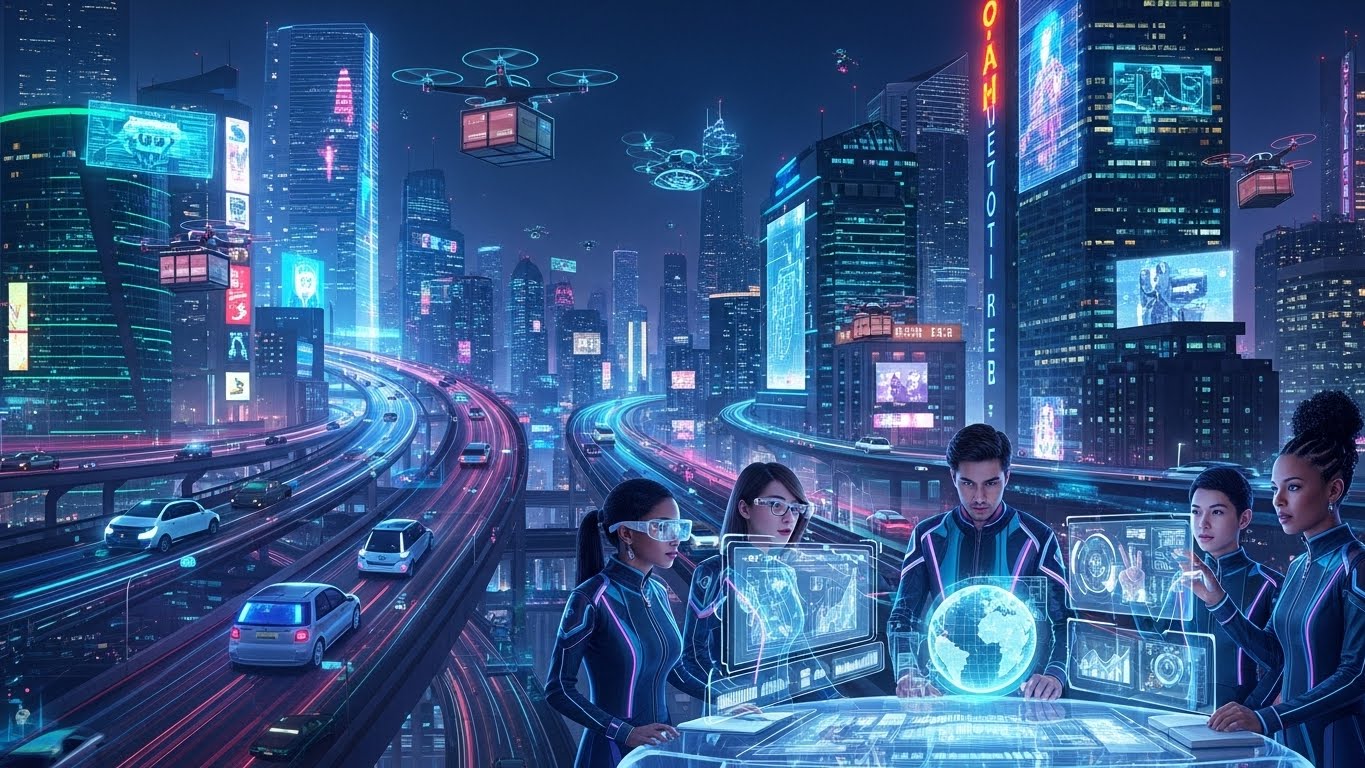
The Future of Technology: Innovation, Challenges, and the Road Ahead

Introduction: The Dawn of a New Technological Era
Technology has evolved at an unprecedented rate in the 21st century, transforming virtually every aspect of human life. From artificial intelligence to quantum computing, the innovations we’re witnessing today were once the stuff of science fiction. As we stand on the precipice of yet another technological revolution, it’s essential to reflect on where we are, the challenges we face, and the boundless potential that lies ahead.
This blog explores the future of technology, shedding light on the innovations that will define the coming years, the obstacles that could hinder progress, and how these advancements will impact individuals, industries, and society as a whole.
The Rise of Artificial Intelligence
Revolutionizing Industries
Artificial Intelligence (AI) is arguably the most significant technological breakthrough in recent history. AI is poised to revolutionize industries across the board, from healthcare and finance to education and entertainment. By mimicking human cognitive functions, AI systems are capable of analyzing vast amounts of data, learning from patterns, and making decisions at speeds far surpassing human capabilities.
In healthcare, for example, AI is being used to diagnose diseases more accurately, predict patient outcomes, and personalize treatment plans. In finance, AI-powered algorithms are helping investors make more informed decisions by analyzing market trends and historical data. As AI continues to evolve, it will automate more tasks, optimize workflows, and enhance decision-making processes across industries.
The Ethics of AI
However, as AI continues to develop, so too does the debate surrounding its ethical implications. Issues like data privacy, bias in machine learning algorithms, and the potential for job displacement have raised concerns about how AI will be integrated into society. The ability of AI to make decisions autonomously in high-stakes scenarios, such as healthcare and criminal justice, has sparked discussions about accountability and transparency.
To ensure that AI remains a force for good, it’s crucial to establish ethical guidelines and regulatory frameworks that address these concerns. As AI becomes more deeply embedded in our daily lives, balancing innovation with ethical responsibility will be key to its successful integration.
The Age of Quantum Computing
Breaking Through Computational Limits
Quantum computing represents another groundbreaking frontier in technology. Unlike classical computers, which process information in binary form (0s and 1s), quantum computers leverage the principles of quantum mechanics to perform calculations in a fundamentally different way. This allows them to solve problems that are currently beyond the reach of even the most advanced supercomputers.
Quantum computing has the potential to revolutionize fields such as cryptography, material science, and artificial intelligence. For example, it could enable the development of new materials with properties that are currently impossible to simulate with classical computers. In cryptography, quantum computing could render existing encryption methods obsolete, prompting the need for new, more secure systems.
Challenges and Roadblocks
Despite its promise, quantum computing is still in its infancy. Developing stable quantum computers that can perform practical, large-scale computations is a massive challenge. Quantum systems are highly sensitive to their environment, and even the smallest disruption can cause errors in calculations. Researchers are working tirelessly to overcome these obstacles, but it will likely take years, if not decades, before quantum computers are widely available and capable of tackling real-world problems.
The Internet of Things: A Connected World
Expanding the Digital Ecosystem
The Internet of Things (IoT) refers to the network of physical devices embedded with sensors, software, and other technologies that allow them to connect and exchange data. From smart home devices like thermostats and security cameras to industrial machines and wearable health trackers, IoT is transforming how we interact with the world around us.
In the future, IoT will enable a fully connected world, where devices can communicate and collaborate seamlessly. For example, in smart cities, IoT sensors could monitor traffic patterns, air quality, and energy consumption in real time, helping to optimize city infrastructure and improve the quality of life for residents. In healthcare, IoT-enabled devices will allow for continuous monitoring of patients, leading to better management of chronic conditions and more personalized care.
Security and Privacy Concerns
While the potential of IoT is vast, it also raises significant security and privacy concerns. As more devices become connected, the attack surface for cybercriminals expands exponentially. IoT devices often collect vast amounts of personal data, which makes them attractive targets for hackers.
To mitigate these risks, it’s crucial to implement robust security protocols and ensure that IoT devices are built with privacy and security in mind. Additionally, regulations surrounding the collection and use of personal data will need to evolve to protect consumers in an increasingly connected world.
Blockchain Technology: Beyond Cryptocurrency
Transforming Industries Beyond Finance
Blockchain technology, which underpins cryptocurrencies like Bitcoin and Ethereum, is much more than just a decentralized digital currency. At its core, blockchain is a distributed ledger system that allows for secure, transparent, and immutable record-keeping. Its potential to transform industries goes far beyond finance.
In supply chain management, for instance, blockchain can be used to track the movement of goods from manufacturer to consumer, ensuring transparency and reducing the risk of fraud. In healthcare, blockchain can facilitate secure sharing of patient records between different institutions, enabling better coordination of care while maintaining privacy and security. The use of smart contracts on blockchain platforms could also streamline business transactions and reduce the need for intermediaries.
Scalability and Regulation Challenges
Despite its promise, blockchain technology faces challenges related to scalability and regulation. The decentralized nature of blockchain makes it difficult to implement widespread adoption across industries. Additionally, the environmental impact of energy-intensive consensus mechanisms like proof-of-work has raised concerns about the sustainability of blockchain networks.
As blockchain continues to mature, addressing these challenges will be critical to unlocking its full potential. Innovations in consensus mechanisms and the development of regulatory frameworks will help guide the responsible growth of blockchain technology.
The Future of Work: Automation and Remote Collaboration
The Rise of Automation
As technology continues to advance, automation is becoming an increasingly prominent feature of the workplace. From manufacturing and logistics to customer service and content creation, automated systems powered by AI, robotics, and machine learning are transforming how work is performed. While automation can improve efficiency and reduce costs, it also raises questions about the future of human labor.
In the coming years, it’s likely that more jobs will be automated, particularly those that involve repetitive or manual tasks. However, this shift could also lead to the creation of new types of jobs that require specialized skills in technology, data analysis, and human-machine collaboration.
Remote Work and Collaboration Tools
The COVID-19 pandemic accelerated the adoption of remote work, and many businesses are now embracing hybrid or fully remote models. The future of work will likely involve a greater reliance on digital collaboration tools, cloud computing, and virtual reality to bridge the gap between remote teams. With advancements in communication technology, workers will be able to collaborate seamlessly across geographical boundaries, opening up new opportunities for global talent.
However, remote work also presents challenges, such as maintaining team cohesion, managing productivity, and ensuring work-life balance. As companies continue to adapt, finding the right balance between remote and in-office work will be essential to fostering a healthy and productive work environment.
Sustainability and Technology: A Green Future
Tech’s Role in Combating Climate Change
As the world grapples with the effects of climate change, technology has the potential to play a pivotal role in creating a more sustainable future. From renewable energy innovations to energy-efficient technologies, tech is helping to reduce our carbon footprint and promote environmental sustainability.
Solar and wind power, once considered expensive and inefficient, are now becoming more viable thanks to advances in energy storage technology and grid management. Electric vehicles, powered by clean energy, are poised to replace traditional gasoline-powered cars, reducing greenhouse gas emissions. Additionally, technologies like carbon capture and storage (CCS) are being developed to help mitigate the impact of industrial pollution.
Challenges in Sustainable Tech
While technology offers promising solutions, there are challenges to achieving a truly sustainable future. The production and disposal of electronic devices, for example, contribute to e-waste, which poses environmental hazards. Moreover, the energy consumption of data centers and blockchain networks is a growing concern.
To create a more sustainable tech industry, it will be necessary to focus on reducing the environmental impact of tech production, improving energy efficiency, and developing circular economies that minimize waste.
Conclusion: A Transformative Future Ahead
The future of technology is both exciting and uncertain. While there are numerous opportunities for innovation, there are also significant challenges to overcome. As AI, quantum computing, blockchain, and other technologies continue to evolve, their impact on industries, society, and daily life will be profound.
At the heart of this technological revolution lies a need for ethical consideration, sustainability, and a focus on human well-being. By addressing these challenges and embracing the potential of innovation, we can shape a future where technology not only drives progress but also enhances the quality of life for people around the world.
As we move forward, it’s clear that technology will continue to redefine what’s possible. The road ahead is full of promise, but it is up to us to ensure that the benefits of technological advancement are realized in a way that serves all of humanity.