The Future of Technology: Innovations Shaping Our World
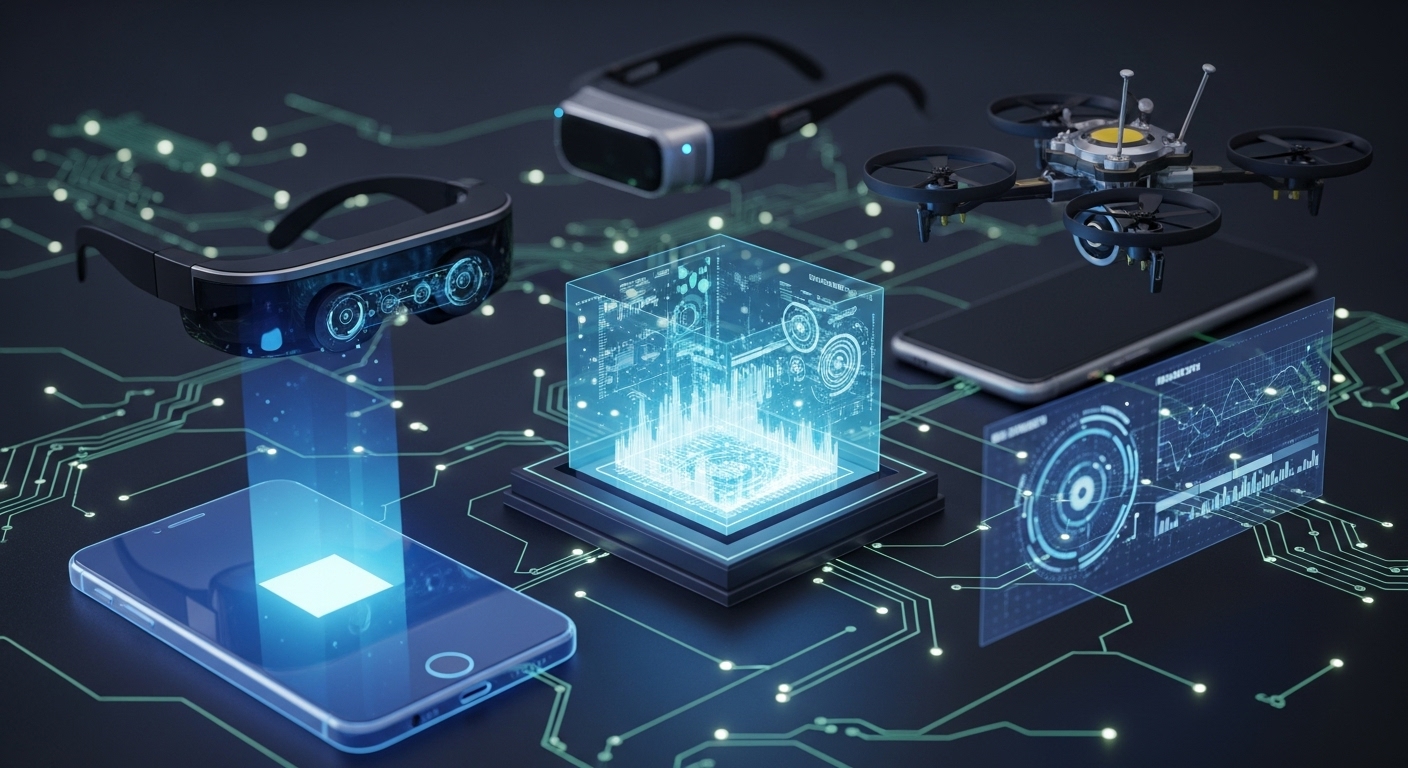
As technology continues to evolve at an exponential rate, we stand on the cusp of a new era. The rapid advancement of innovations such as Artificial Intelligence (AI), Quantum Computing, Biotechnology, and Space Exploration is fundamentally changing how we live, work, and interact with our environment. These technologies are not just abstract concepts; they are already impacting industries, economies, and societies in profound ways. In this blog post, we’ll explore the major technological advancements that are shaping the future and examine how they are transforming every aspect of our lives.
Artificial Intelligence: Pushing the Boundaries of Human Intelligence
Artificial Intelligence (AI) is one of the most exciting and transformative technologies of our time. In its simplest form, AI refers to machines that can mimic human intelligence—machines that can learn, reason, and problem-solve. What sets modern AI apart from traditional computing is its ability to learn from data, adapt to new situations, and even make decisions without explicit programming. Over the last decade, AI has rapidly progressed from a futuristic concept to an everyday reality.
In healthcare, AI has revolutionized diagnostic processes. Machine learning algorithms are now capable of analyzing medical images such as X-rays, MRIs, and CT scans with astonishing accuracy. AI has the potential to diagnose diseases such as cancer, heart conditions, and neurological disorders much earlier than traditional methods. These technologies enable doctors to identify abnormalities in medical images more effectively, leading to quicker diagnoses and better outcomes for patients.
Moreover, AI is playing a pivotal role in personalized medicine. By analyzing large datasets of genetic information, AI algorithms can help identify which treatments are likely to be most effective for individual patients based on their unique genetic makeup. This form of precision medicine could ultimately lead to cures for genetic diseases that have long plagued humanity.
In the field of transportation, AI-powered autonomous vehicles are poised to reshape the way we commute. Self-driving cars, trucks, and drones are already being tested on public roads and are expected to become a common sight in the near future. By eliminating human error, these vehicles promise to drastically reduce traffic accidents, improve fuel efficiency, and reduce traffic congestion.
However, the rise of AI also presents significant challenges. One of the most pressing concerns is job displacement. As AI becomes more sophisticated, it is increasingly capable of performing tasks that were once done by humans. Automation could potentially lead to widespread job losses, especially in industries like manufacturing, retail, and transportation. The ethical implications of AI also need to be carefully considered, particularly when it comes to issues like privacy, surveillance, and algorithmic bias.
Quantum Computing: The Next Frontier in Computing Power
While AI is revolutionizing various industries, another groundbreaking technological advancement is emerging in the form of quantum computing. Traditional computers process information using binary bits, which can be either a 0 or a 1. Quantum computers, on the other hand, use quantum bits, or qubits, which can exist in multiple states simultaneously. This fundamental difference allows quantum computers to perform certain types of calculations exponentially faster than classical computers.
Quantum computing has the potential to transform fields such as cryptography, drug discovery, and material science. One of the most exciting applications of quantum computing is in the field of cryptography. Current encryption methods, which rely on the difficulty of factoring large numbers, could be rendered obsolete by the sheer processing power of quantum computers. While this presents a significant threat to cybersecurity, it also opens the door to the development of quantum-resistant encryption methods that could secure our digital lives.
In drug discovery, quantum computers could simulate molecular interactions at the quantum level, allowing scientists to design new drugs with unprecedented accuracy and speed. Traditional drug discovery involves testing millions of compounds to identify potential treatments, a process that can take years. Quantum computing could drastically accelerate this process, making it possible to develop new treatments for diseases such as cancer, Alzheimer’s, and genetic disorders in a fraction of the time.
Quantum computing also holds promise in the field of material science. Researchers are exploring the potential of quantum computers to simulate the properties of materials at the atomic level, which could lead to the development of stronger, lighter, and more efficient materials for industries ranging from aerospace to electronics.
Despite its immense potential, quantum computing is still in its infancy. The technology faces significant technical challenges, such as the need to maintain quantum coherence and deal with errors introduced by environmental interference. However, the progress being made by companies like IBM, Google, and D-Wave suggests that quantum computers will play a critical role in the near future.
Biotechnology: Engineering the Future of Healthcare
Biotechnology is one of the most rapidly advancing fields in science and technology. At its core, biotechnology uses biological systems and organisms to develop new products and technologies. Advances in genetic engineering, gene therapy, and synthetic biology have the potential to revolutionize healthcare and address some of the world’s most pressing challenges, such as food security, environmental sustainability, and disease prevention.
One of the most significant breakthroughs in biotechnology is CRISPR-Cas9, a gene-editing technology that allows scientists to make precise modifications to an organism’s DNA. This technology has the potential to cure genetic diseases such as sickle cell anemia, cystic fibrosis, and Huntington’s disease by directly editing the faulty genes responsible for these conditions. CRISPR also holds promise in agriculture, where it can be used to create genetically modified crops that are resistant to pests, diseases, and environmental stressors.
In addition to gene editing, biotechnology is playing an increasingly important role in the development of personalized medicine. By analyzing a patient’s genetic information, doctors can now tailor treatments to individuals, ensuring that they receive the most effective therapies with the least amount of side effects. In the field of cancer treatment, for example, personalized therapies are being developed that target specific mutations in cancer cells, offering new hope to patients who were previously resistant to conventional treatments.
Biotechnology is also crucial in the fight against global food insecurity. Scientists are developing genetically modified crops that can thrive in harsh conditions, such as drought or salinity, and have higher nutritional value. This could help feed the world’s growing population and mitigate the effects of climate change on food production.
However, the rapid advancement of biotechnology raises ethical concerns. The ability to edit human genes and create genetically modified organisms brings with it the potential for unintended consequences, both for individuals and the environment. The debate over the ethical implications of gene editing and genetic modification will continue to evolve as these technologies become more widespread.
The Evolution of Renewable Energy: Powering a Sustainable Future
One of the most pressing challenges facing humanity today is the need to transition away from fossil fuels and adopt renewable energy sources. The negative impacts of climate change, caused by the burning of coal, oil, and natural gas, are already being felt around the world, from rising sea levels to extreme weather events. The development of renewable energy technologies is therefore critical for the future of our planet.
Solar power, wind energy, and hydropower are some of the most well-established sources of renewable energy, and they have seen significant improvements in recent years. Solar panels, for instance, have become much more efficient and affordable, making them a viable option for both residential and commercial energy production. The cost of wind energy has also fallen dramatically, and wind turbines are becoming increasingly efficient at generating electricity, even in low-wind regions.
One of the key challenges in the widespread adoption of renewable energy is energy storage. Since solar and wind power are intermittent—meaning they depend on the sun shining or the wind blowing—energy storage technologies are critical for ensuring a stable energy supply. Advanced battery technologies, such as lithium-ion and solid-state batteries, are being developed to store energy more efficiently, making renewable energy sources more reliable.
In addition to improving existing renewable energy technologies, there is also significant interest in emerging sources of clean energy, such as tidal energy, geothermal energy, and even nuclear fusion. While these technologies are still in the early stages of development, they have the potential to play a major role in the transition to a sustainable energy future.
The shift toward renewable energy also offers significant economic opportunities. The renewable energy sector is already creating millions of jobs worldwide, from solar panel installers to wind turbine technicians. As governments and businesses invest more heavily in clean energy, these numbers are expected to grow.
Space Exploration: Reaching New Frontiers
Space exploration has fascinated humanity for centuries, and recent advancements in space technology have made it possible to explore the cosmos in ways that were once thought impossible. The development of reusable rocket technology has drastically reduced the cost of space travel, making space more accessible to both government agencies and private companies.
One of the most exciting developments in space exploration is the renewed interest in the Moon. NASA’s Artemis program aims to land humans on the Moon by 2024, with the long-term goal of establishing a sustainable lunar base. The Moon is seen as a stepping stone for future missions to Mars and beyond, and it is also believed to hold valuable resources, such as water ice, that could support long-term human habitation.
Mars, however, remains the ultimate goal for space explorers. Companies like SpaceX, led by Elon Musk, are working toward sending humans to Mars within the next decade. Colonizing Mars is a monumental challenge, requiring advancements in life support systems, radiation protection, and long-duration space travel. But the potential rewards are enormous. Establishing a human presence on Mars would not only expand our understanding of the Red Planet but could also serve as a backup for humanity in the event of a catastrophic event on Earth.
In addition to manned missions, robotic probes and telescopes are continuously expanding our knowledge of the universe. The James Webb Space Telescope, set to launch soon, promises to revolutionize our understanding of the origins of the universe, the formation of galaxies, and the potential for life on exoplanets.
Conclusion: Embracing a Technologically Advanced Future
The future of technology is both exciting and uncertain. Innovations in artificial intelligence, quantum computing, biotechnology, renewable energy, and space exploration have the potential to radically transform every aspect of our lives. While these technologies promise incredible benefits, they also come with significant challenges and ethical considerations. The key to a successful technological future lies in how we choose to harness and govern these innovations. By embracing responsible development, investing in education and training, and fostering collaboration, we can ensure that the technologies of tomorrow work for the benefit of all.
As we look toward the future, one thing is clear: the technological revolution is only just beginning. The next few decades will be defined by the breakthroughs that will shape not just our lives, but the future of humanity itself. The possibilities are boundless, and the world we live in tomorrow will be shaped by the choices we make today.